
Blagaj & Mostar
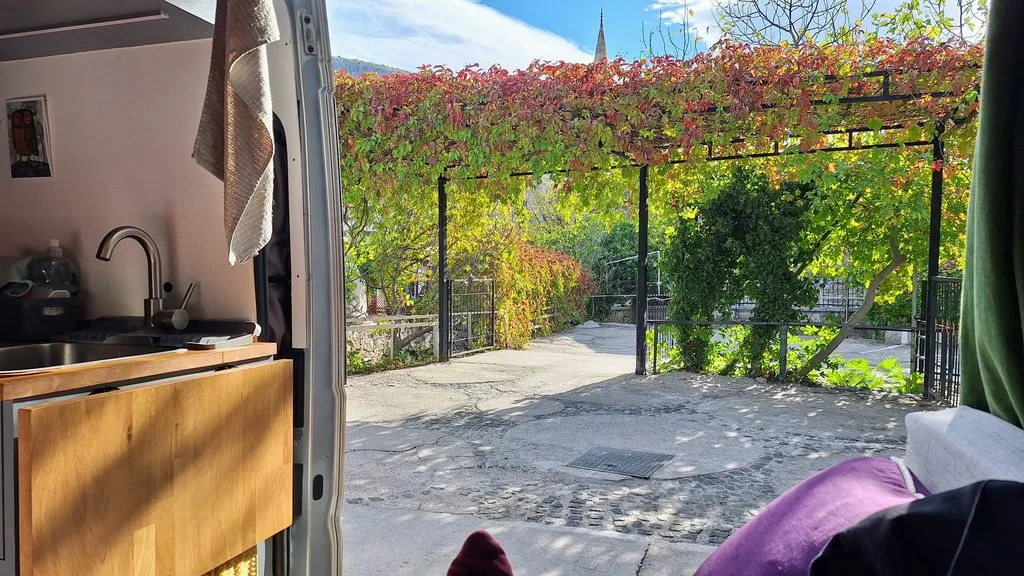
In Mostar we managed to park right in the old town, complete with some (slightly pilfered but actually totally above-board) Wifi, which made it a perfect base for exploring on foot.
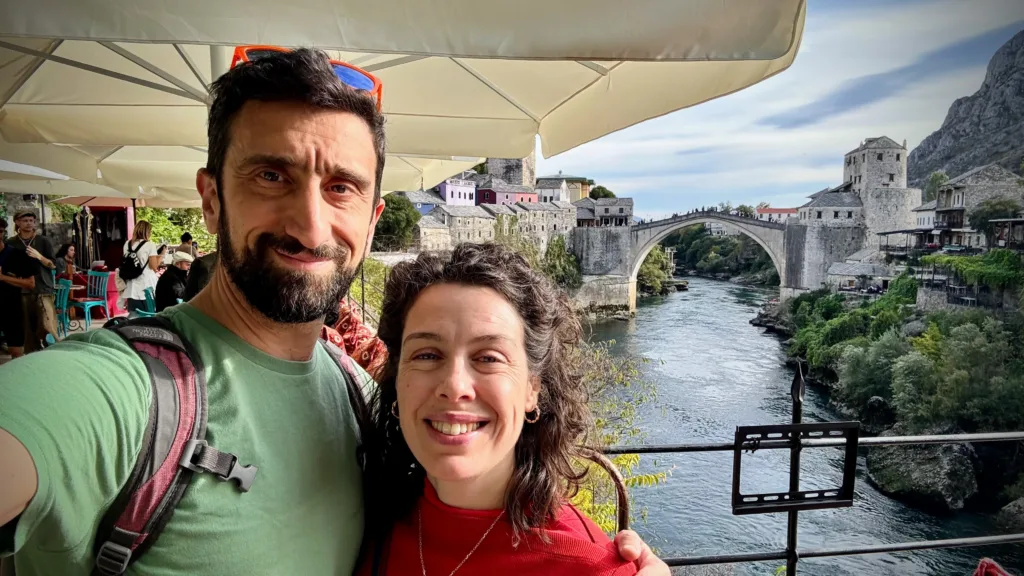
The town’s centrepiece is the Stari Most, or Old Bridge: a single, steeply humped stone arch over the impossibly green Neretva, built by the Ottomans in 1566. It stood for over 400 years before it was shelled and destroyed in November 1993, during the war, and was rebuilt with the same local stone and traditional Ottoman techniques, reopening in 2004.
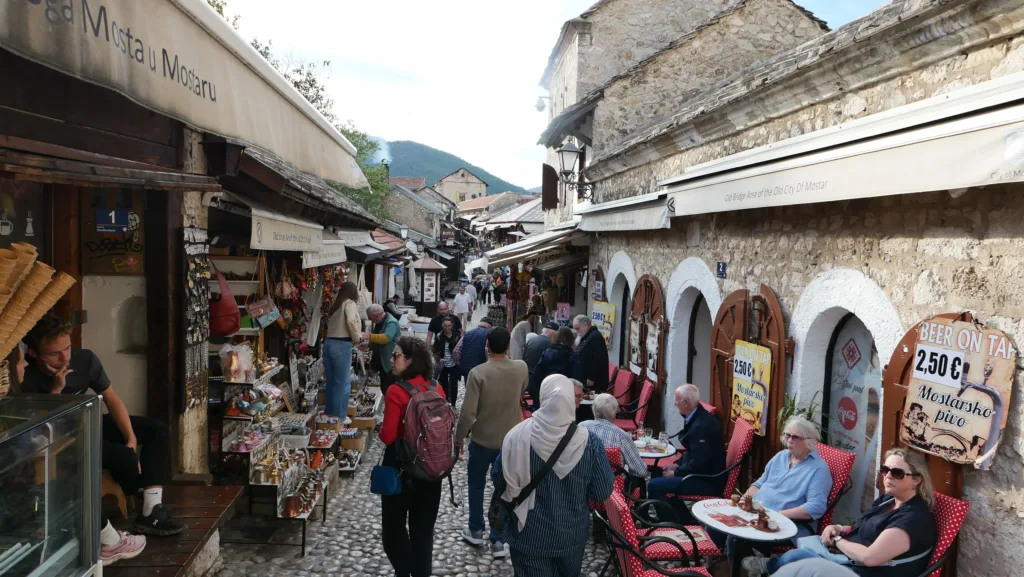
After a full day of wondering the cobbled streets of the old town and doing some travel planning at a smoke-free cat cafe in the student district, We got chatting to Ramiz, the parking attendant, by inviting him for an aperitif (he quickly accepted, saying “why not?”. His English may not have been perfect, but it turned out he spoke fluent Italian, so we ended up having a proper conversation about all kinds of topics, and learning a lot about Mostar and Bosnia in the process.
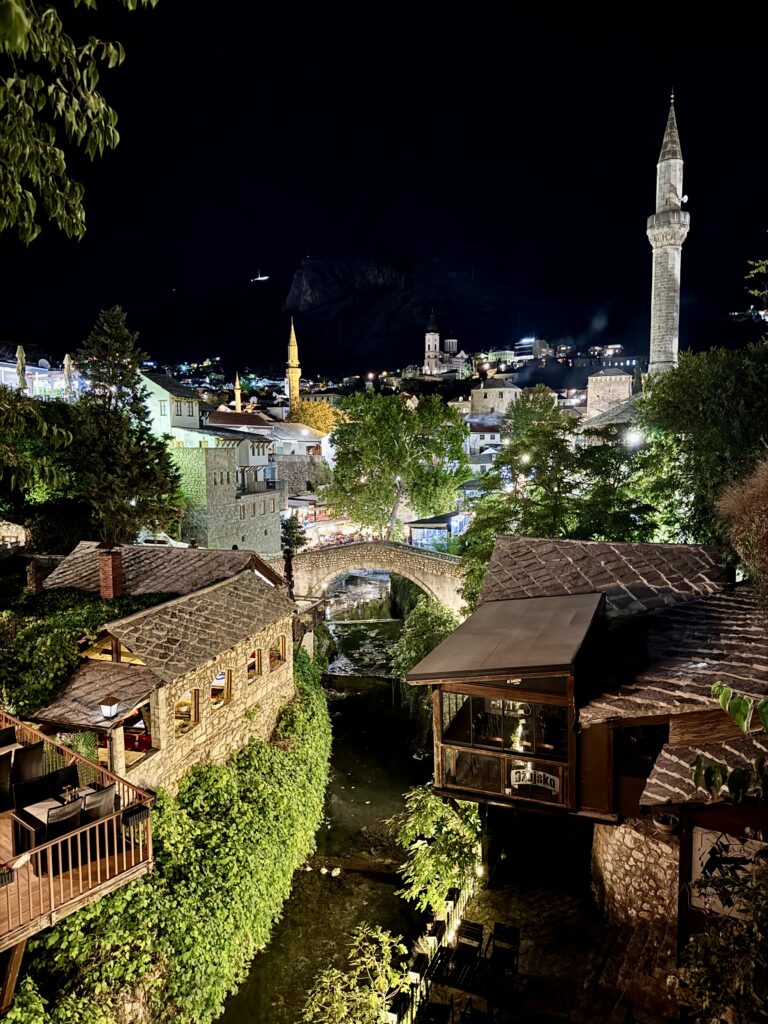
The bridge and the old town around it are now a UNESCO World Heritage Site. Local divers still keep up the centuries-old tradition of jumping from the top into the river more than 20 metres below, as they did even during the years when the bridge wasn’t there… a temporary bridge was built just so the tradition could be continued. That’s something we learned about during a deeply moving visit to the War Photo Museum.
The scars of the 1990s were as easy to notice in the way Ramiz spoke as they were on the many abandoned buildings around Mostar, and the museum was a reminder of just how recent it all is.
The next day we drove the 12 km or so south-east to Blagaj and pulled up at a lovely, very relaxed and very welcoming campsite. After parking up we we strolled down to the riverside reception and were offered a complimentary welcome drink of our choice… I suggested the local white wine. We were poured two very full glasses of it, accompanied by cake, and then a second glass came out before we’d even finished the first. We decided there and then we would not be doing anything for the remainder of the afternoon other than chilling, doing some washing and looking around the lovely site. We later discovered the wine was made by the proprietor’s uncle.
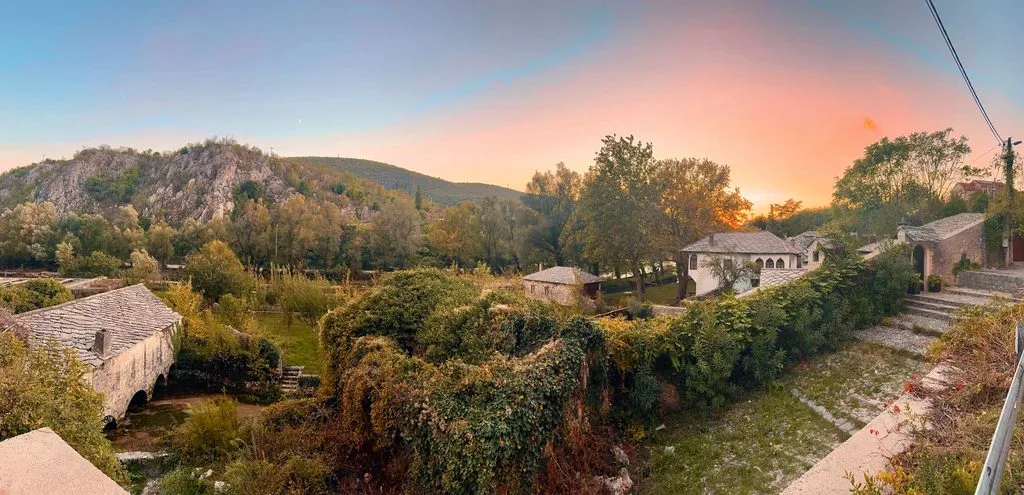
After dinner though we had a second wind, and an evening stroll turned into a proper walk down to the village and to the big attraction of the area: the place where the Buna river comes straight out of a cave at the foot of a 200-metre cliff. It’s one of the biggest karst springs in Europe, and the water is the same unreal emerald as the Neretva. Tucked against the cliff right beside the spring is the Blagaj Tekija, a dervish house from Ottoman times that’s still a place of Sufi worship today. Visiting it in the evening after the crowds had left really felt like a special moment in a sacred, and very humble place – so much so in fact that it didn’t occur to us to take any photos!
High above the village are the ruins of Stjepan Grad, the fortress of Herceg Stjepan Kosača, the 15th-century nobleman whose title, herceg (duke), gave Herzegovina its name. This is wine country too (the local grapes are Žilavka and Blatina), so the free wine felt like a fitting bonus.